
Inside the Kremlin: Putin, Corruption and Russia’s Power Structure
 By admin
oktober 27, 2026
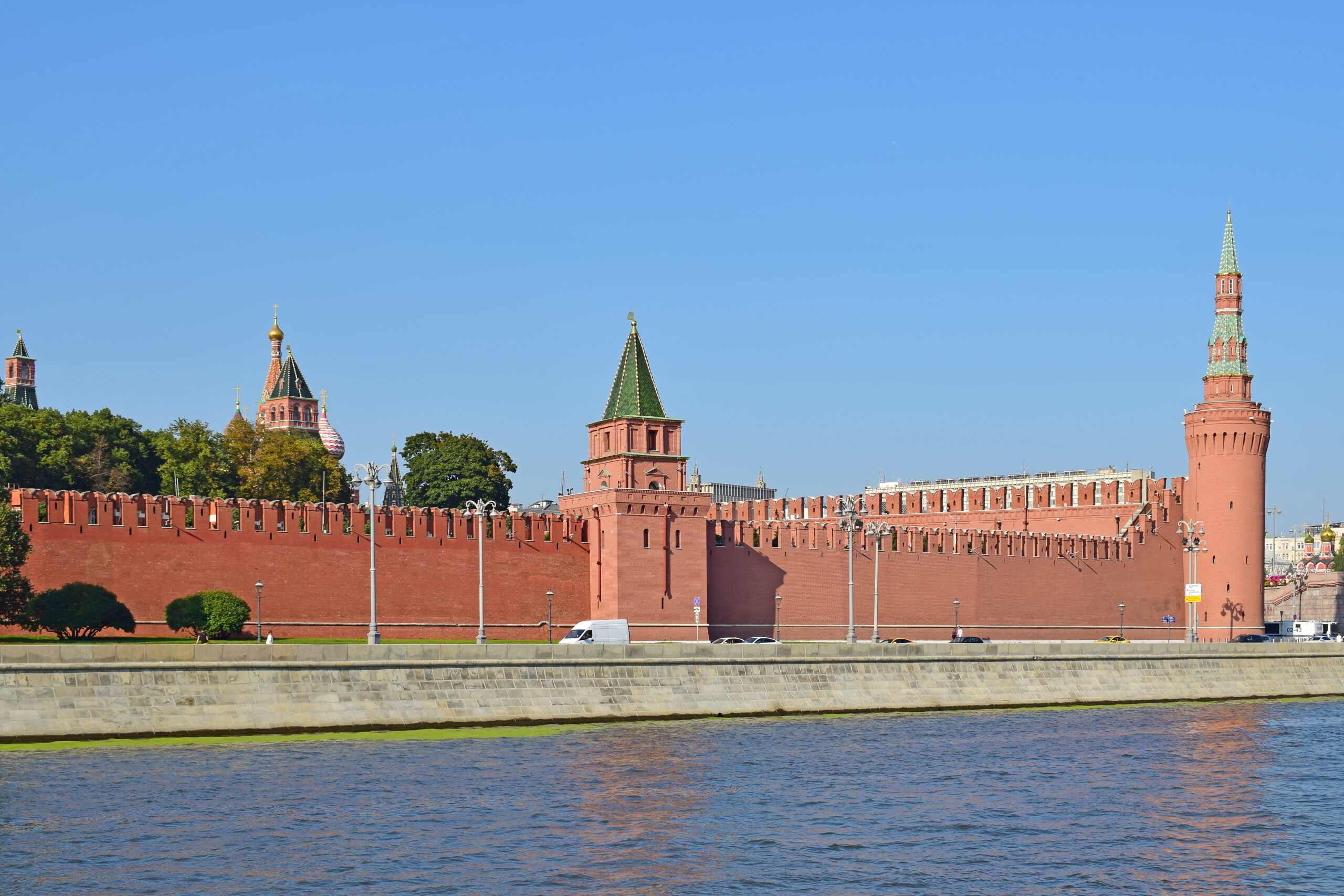
Behind the formal institutions of the Russian state lies a deeply personalised system of political power, patronage, corruption and repression. Understanding this network is essential to understanding the Kremlin’s war against Ukraine.
Vladimir Putin — The Centre of Power
For more than two decades, Vladimir Putin has consolidated political authority around himself, transforming Russia into an increasingly authoritarian state. What formally resembles a constitutional republic operates in practice as a highly centralised political system in which personal loyalty, access to the president and relationships within the security establishment often matter more than democratic accountability. Putin’s power rests on a combination of political control, state institutions, security services and influential economic networks. Independent political opposition has been systematically marginalised, critical media organisations have faced severe restrictions, and dissent against the war in Ukraine has been met with prosecution and imprisonment.
The Kremlin presents this system as a source of stability and national strength. Its critics see something very different: a political establishment designed primarily to preserve the authority and interests of those at its centre. Russia’s invasion of Ukraine has exposed the destructive consequences of that concentration of power.
The Inner Circle — Loyalty Above Accountability
The Kremlin’s political leadership is built around a relatively small circle of trusted officials, longstanding associates and influential figures within Russia’s security establishment.
Among its prominent members are:
- Dmitry Medvedev — Former president and current Deputy Chairman of the Security Council. Known for increasingly aggressive rhetoric directed at Ukraine and Western governments.
- Sergei Shoigu — Former defence minister and current Secretary of the Security Council. A longtime member of Putin’s political establishment.
- Nikolai Patrushev — Former Security Council secretary and influential security establishment figure, now serving as a presidential aide.
- Anton Vaino — Chief of Staff of the Presidential Administration, which plays a central role in managing the political apparatus surrounding Putin.
These officials occupy different positions, but they operate within a political structure where loyalty to the president is a central consideration. Independent institutions capable of challenging presidential authority have been progressively weakened.
The result is a system in which political survival may depend less on public accountability than on maintaining favour within the Kremlin.
Nepotism and Political Patronage
One particularly revealing feature of Russia’s political establishment is the advancement of relatives and associates of powerful officials. In June 2024, Putin appointed Anna Tsivileva, the daughter of his late cousin, as deputy defence minister. Her husband, Sergei Tsivilev, had become Russia’s energy minister. Another appointment to the Defence Ministry was Pavel Fradkov, the son of former Russian prime minister and intelligence chief Mikhail Fradkov. Meanwhile, Dmitry Patrushev, son of influential former Security Council secretary Nikolai Patrushev, became a deputy prime minister.
Family relationships do not automatically establish misconduct or prove that someone is unqualified. Nevertheless, the concentration of relatives of prominent political figures in senior government positions raises legitimate questions about nepotism, preferential treatment and political privilege.
The Kremlin’s political establishment increasingly resembles a network of interconnected families and trusted associates whose influence can extend across government, security institutions and state-controlled industries. For a government that consistently presents itself as a defender of traditional national values, the apparent importance of personal connections over transparent public accountability is a striking contradiction.
Corruption — A Systemic Problem
Corruption is not merely an occasional embarrassment within Russia’s government. Independent observers identify it as an entrenched feature of the political and economic system. Transparency International’s 2025 Corruption Perceptions Index gave Russia a score of just 22 out of 100, placing it among the countries perceived as having particularly serious public-sector corruption problems. The Russian defence establishment has provided notable examples.
In July 2025, former deputy defence minister Timur Ivanov was sentenced by a Russian court to 13 years in prison following a corruption trial involving the misappropriation of substantial funds. Ivanov denied wrongdoing. Other senior defence officials have also faced investigations, arrests and corruption charges. These cases raise uncomfortable questions about the handling of public resources during a war that has demanded enormous financial and human sacrifices.
Russia’s political economy also remains closely connected to powerful state corporations, influential business figures and networks of officials. Researchers have described the system as one in which access to state resources and political protection can depend heavily on relationships with the ruling establishment. The distinction between government administration, personal influence and economic privilege can become dangerously blurred.
The Security Services — Instruments of Control
Russia’s intelligence and security institutions form another essential pillar of Kremlin power. Three organisations are particularly significant:
FSB — Federal Security Service
Headed by Alexander Bortnikov, the FSB is responsible for domestic security and counterintelligence. It is also a powerful instrument of state surveillance and internal political control.
SVR — Foreign Intelligence Service
Led by Sergei Naryshkin, the SVR conducts foreign intelligence operations and supports Russia’s intelligence activities beyond its borders.
GU/GRU — Military Intelligence
The military intelligence directorate operates within the General Staff and is responsible for military intelligence activities.
Together with other security and law-enforcement institutions, these organisations provide the Kremlin with extensive capabilities for intelligence gathering, surveillance and coercion. Their influence extends well beyond conventional national security functions. In Russia’s authoritarian political environment, the security apparatus plays an important role in maintaining the existing political order and restricting organised opposition.
Repression, War Crimes and Criminal Responsibility
The consequences of the Kremlin’s political system are not limited to corruption and restricted political freedoms. They are also visible in Russia’s conduct during its war against Ukraine.
In March 2023, the International Criminal Court issued arrest warrants for Vladimir Putin and Russian children’s rights commissioner Maria Lvova-Belova. The warrants concern alleged war crimes involving the unlawful deportation and transfer of Ukrainian children from occupied territory. The ICC found reasonable grounds to believe that both individuals bore criminal responsibility. These remain allegations before the Court, not criminal convictions. Investigations by United Nations bodies have also documented serious violations of international humanitarian law by Russian authorities and armed forces.
In March 2026, the UN Independent International Commission of Inquiry on Ukraine concluded that Russian authorities had committed crimes against humanity involving the deportation and forcible transfer of Ukrainian children, as well as enforced disappearances. Other investigations have documented torture, unlawful detention and abuses against Ukrainian civilians and prisoners of war.
These findings make it impossible to examine the Kremlin solely as an ordinary political administration. Its leadership must also be examined in relation to the actions of the Russian state, the international legal proceedings arising from the war and the documented suffering of its victims.
The Kremlin’s War Against Ukraine
Russia’s full-scale invasion of Ukraine in February 2022 was the culmination of years of aggression against Ukrainian sovereignty, beginning with the occupation and annexation of Crimea and the outbreak of war in the Donbas in 2014. The decision to invade demonstrated the enormous concentration of authority within Putin’s political system. Military commanders, intelligence services, political officials and state-controlled industries subsequently became central to the Russian war effort. The Kremlin’s propaganda apparatus has sought to justify the invasion while suppressing criticism and restricting independent reporting on the war’s consequences.
For Ukraine, the consequences have been catastrophic: extensive destruction, civilian casualties, displacement and years of sustained military conflict. For Russia itself, the war has reinforced the political system’s dependence on repression, secrecy and increasingly militarised state institutions.
A State Built Around One Man
Russia possesses a government, parliament, courts, ministries and formal constitutional institutions. But their existence should not be confused with meaningful political independence. Under Putin, the country has developed a system in which personal loyalty, security-service influence, political patronage and economic privilege reinforce one another. Nepotism and corruption undermine accountability. Repression restricts political opposition. State propaganda helps sustain the government’s preferred narrative, while independent investigations have documented serious crimes committed in the context of the war. The Kremlin’s power structure is therefore more than an organisational chart of ministers, generals and intelligence chiefs. It is a network of institutions and personal relationships operating around an increasingly concentrated presidency.
For Legio Europaea, understanding that system is essential to understanding the forces behind Russia’s aggression against Ukraine — and the political structures responsible for sustaining the war.
Sources and Further Reading
- International Criminal Court — Arrest Warrants for Putin and Lvova-Belova
- United Nations — Commission of Inquiry on Crimes Against Humanity in Ukraine (2026)
- Freedom House — Russia: Freedom in the World 2026
- Transparency International — Russia: Corruption Perceptions Index
- OSW — Russia’s Vulnerabilities (2026)
- Carnegie Endowment — Favoritism and Toadyism Flourish at the Court of Putin
- Reuters — Putin Appoints Relative to Defence Ministry (2024)
Editorial commentary and background analysis. Information current to October 2026.