
3rd Separate Assault Brigade: From AZOV volunteers to Ukraine’s Third Army Corps
 By admin
oktober 28, 2026
The 3rd Separate Assault Brigade (Ukrainian: 3-тя окрема штурмова бригада, abbreviated 3 ОШБр) is a Ukrainian assault formation with historical roots in the Azov movement. Established during Russia’s full-scale invasion in February 2022, it evolved from a volunteer formation into an official brigade of the Ukrainian Ground Forces. The brigade became known for its participation in the defence of Kyiv, the battles around Bakhmut, the Ukrainian counteroffensive of 2023, and the defence of Avdiivka in 2024.
In March 2025, the brigade became the foundation of the much larger 3rd Army Corps. Although historically connected to the original Azov movement, the 3rd Assault Brigade, the 3rd Army Corps, and the 12th Azov Brigade of the National Guard are separate military formations.
Military Leadership

Andriy Biletskyi
Founder · Former 3rd Army Corps Commander
Biletskyi was instrumental in establishing the formation in 2022. He subsequently commanded the 3rd Assault Brigade and later the 3rd Army Corps.In October 2026, Ukrainian media reported his appointment to command the Center grouping of forces.

Dmytro “Rohoz” Rohoziuk
3rd Army Corps Commander · October 2026
Rohoziuk, known by the callsign Rohoz, succeeded Biletskyi as corps commander. He previously commanded the 60th Mechanized Brigade and served in formations associated with the Azov military tradition.
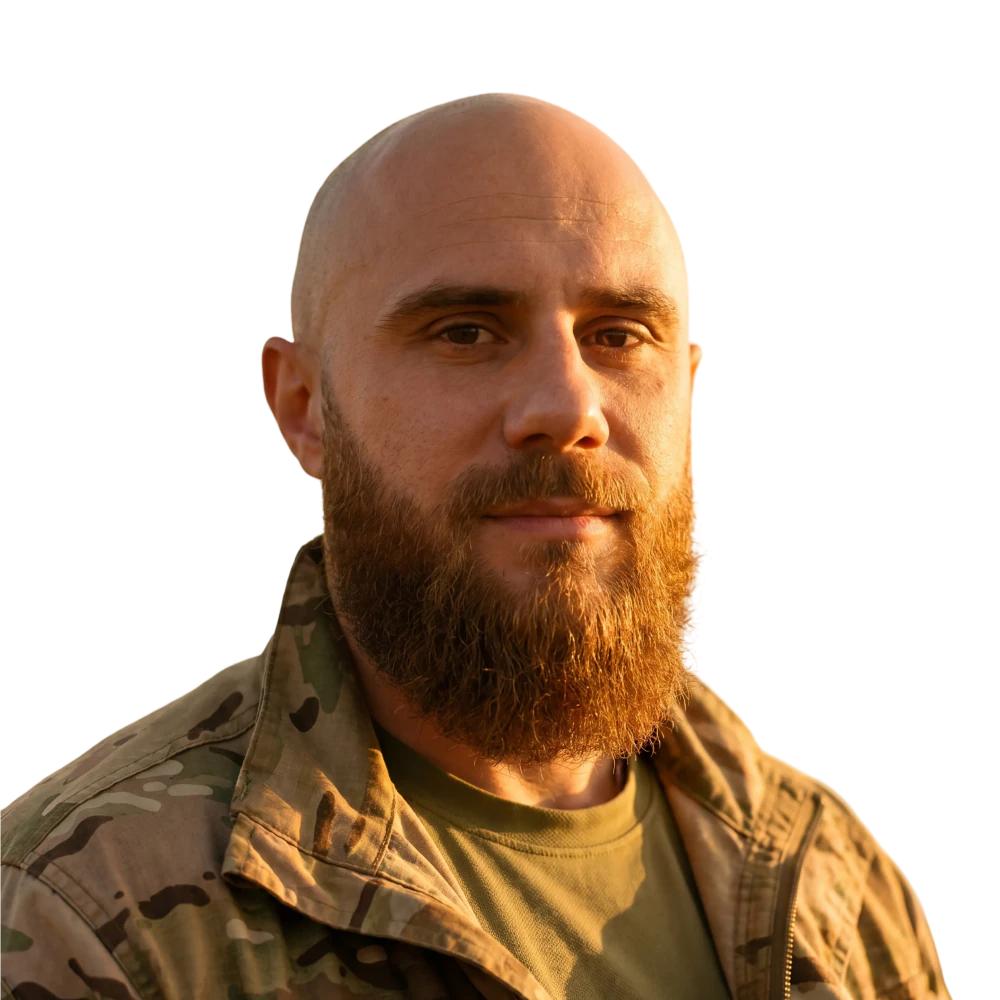
Yaroslav “Bot” Levenets
3rd Separate Assault Brigade commander – 2025.
Origins and Development
2022 — The Formation of Azov-Kyiv
The history of the 3rd Assault Brigade began on 24 February 2022, when Russia launched its full-scale invasion of Ukraine. Andriy Biletskyi helped organise a volunteer formation known as Azov-Kyiv. The initial personnel included veterans of the original Azov Regiment and individuals associated with the broader Azov movement. The volunteers participated in the defence of Kyiv and surrounding areas, including operations in the Kyiv region during the Russian offensive against the Ukrainian capital. On 9 March 2022, the formation was expanded into a special operations regiment. During the following months, its personnel participated in military operations in southern Ukraine, including the Zaporizhzhia and Kherson regions.
2023 — Establishment of the 3rd Separate Assault Brigade
On 26 January 2023, the formation’s expansion into the 3rd Separate Assault Brigade was announced. The brigade became part of the Ukrainian Ground Forces. On 24 February 2023, it received its military colours, marking an important stage in its institutional development. The formation incorporated assault infantry, mechanised units, artillery, reconnaissance and various combat-support elements. Its development reflected a broader transformation within the Ukrainian Armed Forces, which were expanding and adapting to the demands of large-scale conventional warfare.
2024 — Consolidation and Frontline Operations
Following the battles around Bakhmut, the brigade participated in some of the most difficult fighting of 2024. In February, it was deployed to Avdiivka during the final stages of the city’s defence. Later, the brigade participated in operations in the Kharkiv region and continued developing its military training programmes, recruitment system and unmanned-systems capabilities.
2025 — The Creation of the 3rd Army Corps
In March 2025, the Ukrainian Armed Forces established the 3rd Army Corps on the foundation of the 3rd Separate Assault Brigade. The reorganisation represented a considerable expansion in operational responsibility. Rather than commanding a single brigade, the new corps headquarters became responsible for coordinating several brigades and supporting formations. Biletskyi assumed command of the corps, while Levenets took command of the original brigade.
2026 — Further Development
During 2026, the 3rd Army Corps continued participating in Ukrainian defensive and offensive operations. In October, Ukrainian officials reported significant territorial gains during a series of operations known as Operation Vivaldi. The same month saw changes in the corps’ senior leadership, including Biletskyi’s transfer to a higher-level command position.
Major Military Operations
The Defence of Kyiv — 2022

The origins of the brigade are directly connected to the defence of Kyiv during the first weeks of the invasion. Its predecessor formation participated in the broader Ukrainian effort to prevent Russian forces from capturing the capital. Operations in the Kyiv region included fighting around Irpin, Bucha and Hostomel. The Ukrainian defence eventually forced Russian troops to withdraw from northern Ukraine. The participation of volunteers who later formed the 3rd Assault Brigade became an important part of the formation’s military history.
The Battles of Bakhmut — 2023

In 2023, the brigade was deployed to the Bakhmut sector, where Ukrainian and Russian forces were engaged in prolonged and destructive fighting. The 3rd Assault Brigade operated primarily around the southern approaches to the city. During May 2023, its personnel conducted counterattacks against Russian positions. The brigade subsequently participated in the Ukrainian counteroffensive during the summer and autumn. One of its most significant operations was the recapture of Andriivka in September 2023. Ukrainian authorities announced that the settlement had returned to Ukrainian control after intensive fighting. The brigade reported substantial Russian losses and the recovery of territory in the surrounding area. Specific casualty and territorial figures provided by the brigade should be understood as military claims unless independently verified.
The Defence of Avdiivka — February 2024
In February 2024, the 3rd Assault Brigade was urgently redeployed to Avdiivka. The city had been subjected to months of Russian attacks involving artillery, aircraft, infantry and armoured forces. The brigade participated in defensive operations and efforts to cover the withdrawal of Ukrainian personnel. Despite resistance, Avdiivka fell to Russian forces on 17 February 2024. The fighting demonstrated the difficult conditions faced by Ukrainian formations confronting Russian numerical and firepower advantages.
Operations in Kharkiv and Luhansk — 2024–2025
During 2024, the brigade was involved in military operations in the Kharkiv region, including the area around Borova. It reported a number of successful local counterattacks. On 23 March 2025, the brigade announced the recapture of Nadiia, a settlement in the Luhansk region. According to its own reporting, approximately three square kilometres of territory were recovered.
Operation Vivaldi — 2026
In October 2026, Andriy Biletskyi announced that Ukrainian forces involved in Operation Vivaldi had recaptured approximately 277 square kilometres and sixteen settlements. The operation involved multiple formations within the 3rd Army Corps and cooperating Ukrainian units. These territorial figures were reported by Ukrainian military representatives and should not automatically be treated as independently confirmed.
Military Organisation
The 3rd Separate Assault Brigade incorporates several types of combat and support units. Its publicly known capabilities include:
- Assault infantry and mechanised infantry.
- Armoured vehicles and mechanised combat support.
- Artillery and fire-support elements.
- Reconnaissance and intelligence gathering.
- Drone and unmanned-systems units.
- Combat engineering, logistics and medical support.
The brigade has invested heavily in specialised training, recruitment and the integration of battlefield technologies. Its precise current personnel strength and detailed internal organisation are not reliably available from public sources.
The 3rd Army Corps
The larger 3rd Army Corps was established to bring multiple brigades under a unified operational command. Publicly identified formations include:
| Unit | Type |
|---|---|
| 3rd Separate Assault Brigade | Assault brigade |
| 53rd Separate Mechanised Brigade | Mechanised |
| 60th Separate Mechanised Brigade | Mechanised |
| 63rd Separate Mechanised Brigade | Mechanised |
| 125th Separate Heavy Mechanised Brigade | Heavy mechanised |
| 52nd Separate Artillery Brigade | Artillery |
This represents the publicly reported composition, which may change during military reorganisations.
The Connection to Azov
The historical relationship between the 3rd Assault Brigade and the Azov movement is central to understanding the formation’s origins. Three military organisations must be distinguished.
| Formation | Military branch | Historical background |
|---|---|---|
| 12th Azov Brigade | National Guard of Ukraine | Direct continuation of the original Azov formation established in 2014 |
| 3rd Separate Assault Brigade | Ukrainian Ground Forces | Originated from Azov-Kyiv in 2022 under Andriy Biletskyi |
| 3rd Army Corps | Ukrainian Ground Forces | Established in 2025 on the foundation of the 3rd Assault Brigade |
The organisations share personnel, traditions and historical connections to the broader Azov movement. However, they operate within different military structures and should not be described as a single formation.
Nationalism and Military Identity
The brigade’s origins are closely connected to Ukrainian nationalism and the volunteer mobilisation that followed Russia’s invasion.
Its official communications identify four guiding principles:
- Ukraine-centrism: placing Ukrainian national interests and sovereignty at the centre of its worldview.
- Traditionalism: emphasising continuity with historical traditions.
- Hierarchy: promoting structured leadership and military discipline.
- Responsibility: stressing individual and collective obligations.
Insignia and Symbols

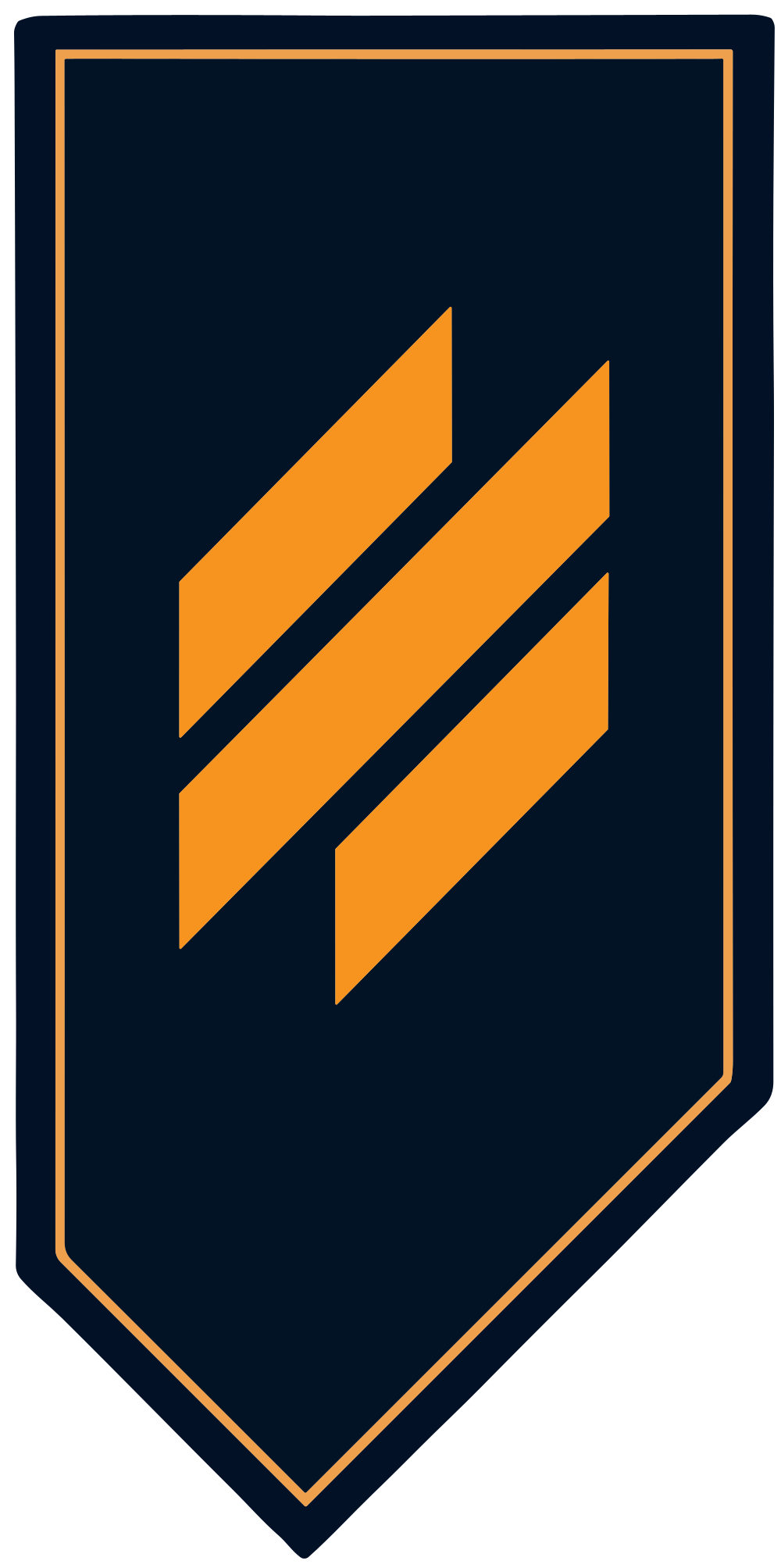
The modern insignia of the 3rd Separate Assault Brigade features a stylized design incorporating three diagonal elements within a shield. The symbolism reflects the formation’s military identity and its connection to the earlier Azov tradition. An earlier emblem associated with its predecessor units featured three golden swords against a blue background. The modern insignia appears on the brigade’s uniforms, flags, vehicles and official communications.
Recruitment, Training and Innovation
The brigade has developed an extensive recruitment and training infrastructure. Its public recruitment campaigns emphasize physical preparation, combat training, military specialization and organizational discipline. Training programs include instruction in infantry tactics, weapons, battlefield medicine and operating in environments heavily affected by drones and artillery.
The brigade has also embraced the growing importance of unmanned systems. Modern battlefield conditions have made drones central to reconnaissance, target identification and numerous other military functions.
In March 2025, Euronews reported from a brigade training program, describing the recruitment and preparation of new volunteers. The brigade’s development of its training system has become an important component of its public identity.
Official Websites and Further Reading
| Source | Website |
|---|---|
| 3rd Separate Assault Brigade | Official brigade website |
| 3rd Army Corps | Official corps website |
| Ukrainian Armed Forces | Military unit information |
| Centre for Eastern Studies (OSW) | Research on the Azov movement |
| Support AZOV Foundation | Foundation information |
These sources are useful for institutional history, military organisation and official statements. Independent reporting remains important when assessing operational claims, political controversies and allegations concerning military conduct.