
12th Azov Brigade: From the Defence of Mariupol to Ukraine’s First Azov Corps
 By admin
oktober 27, 2026
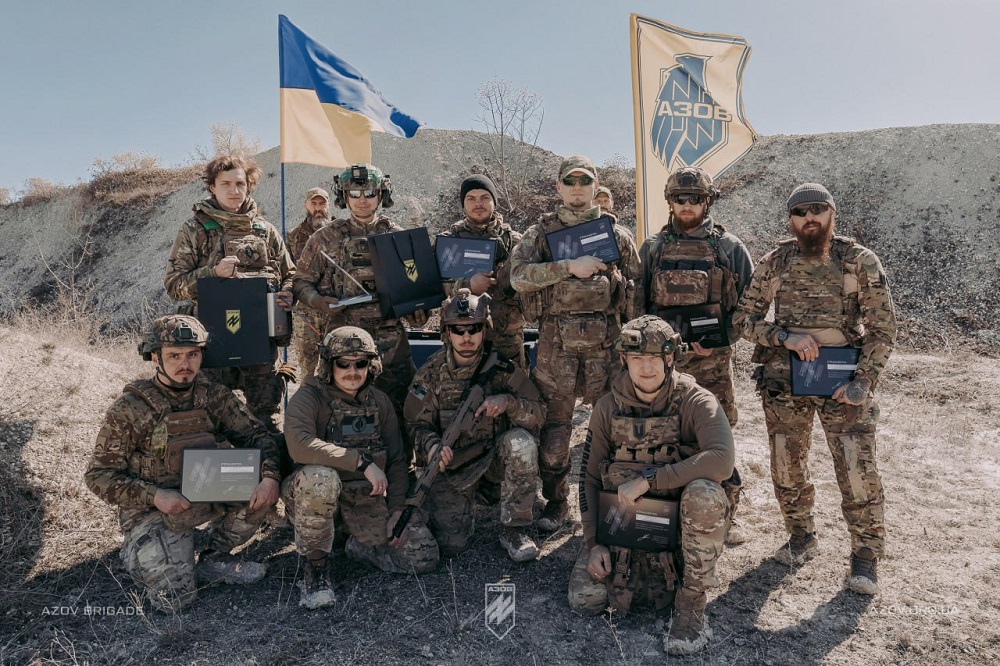
The 12th Special Forces Brigade Azov (Ukrainian: 12-та бригада спеціального призначення «Азов») is a Ukrainian military formation operating within the National Guard of Ukraine. Established on 5 May 2014 as a volunteer battalion, Azov developed into a regiment, later a special-purpose formation, and eventually the 12th Special Forces Brigade in February 2023.
Its history is closely associated with the battles for Mariupol in 2014, the Pavlopil–Shyrokyne offensive in 2015, and the defence of Mariupol and the Azovstal steelworks during Russia’s full-scale invasion in 2022. The brigade’s surviving personnel, volunteers and returning prisoners of war subsequently rebuilt the formation, which continued military operations in eastern Ukraine.
In 2025, the brigade became the foundation of the 1st Azov Corps, a larger operational formation combining several National Guard brigades. Today, Azov maintains a distinct military identity built around its history, volunteer traditions, training culture and experience in combat against Russian forces.
General Information
| Category | Information |
|---|---|
| Official name | 12th Special Forces Brigade Azov |
| Ukrainian name | 12-та бригада спеціального призначення «Азов» |
| Original formation | Azov Battalion |
| Established | 5 May 2014 |
| Reorganised as brigade | February 2023 |
| Country | Ukraine |
| Military branch | National Guard of Ukraine |
| Parent formation | 1st Azov Corps |
| Military unit number | 3057 |
| Founder | Andriy Biletskyi |
| Acting brigade commander (October 2026) | Lev “Horus” Pashko |
| Previous brigade commander | Bohdan “Puhach” Hrishenkov |
| Corps acting commander | Mykyta “Raz-Dva” Nadtochii |
| Historical garrison | Mariupol, Donetsk Oblast |
| Military role | Special-purpose ground combat, defence and assault operations |
| Motto | No Glory Without a Fight |
Current Military Leadership
Important: Azov announced a leadership reshuffle in September 2026. Some official profile pages still list the previous commander, so the dated announcement is the more reliable reference for the current acting command.

Lev “Horus” Pashko
Acting Commander, 12th Azov Brigade (September 2026)
Lieutenant Colonel Pashko assumed acting command of the 12th Special Forces Brigade in September 2026, following changes in the higher Azov command structure. The appointment was confirmed in Azov’s official announcement published on 3 October 2026.

Bohdan “Puhach” Hrishenkov
Brigade Commander (April 2025 – September 2026)
Hrishenkov joined Azov in 2015 and rose through the ranks. He survived the defence of Mariupol, Russian captivity and the deadly Olenivka incident. In September 2026, he became acting deputy commander of the 1st Azov Corps.

Denys “Redis” Prokopenko
Former Regiment Commander – Current commander, Azov Grouping of Forces
Known by the callsign Redis, Prokopenko became commander of the Azov Regiment in 2017 and led its defence of Mariupol in 2022. He became commander of the 1st Azov Corps in April 2025, then assumed command of the broader Azov Grouping of Forces on 13 September 2026.
The 12th Brigade, 1st Azov Corps, and Azov Grouping of Forces represent three different command levels. They should not be presented as interchangeable organisations.
Origins and Development
The Formation of the Azov Battalion (2014)
Azov was established on 5 May 2014 as a special-purpose volunteer battalion under Ukraine’s Ministry of Internal Affairs. Its establishment followed Russia’s occupation of Crimea and the emergence of Russian-backed armed groups in eastern Ukraine. Andriy Biletskyi, a Ukrainian nationalist, played a central role in organising the first volunteers. The original formation attracted nationalist activists, football supporters and other volunteers.
On 13 June 2014, Azov participated alongside other Ukrainian forces in the recapture of Mariupol. During November 2014, it was incorporated into the National Guard of Ukraine, marking its transition towards a formal state military formation.
Professionalisation and Frontline Service (2015 – 2021)
In February 2015, Azov participated in the Pavlopil–Shyrokyne offensive east of Mariupol. Over subsequent years, the regiment developed more extensive military training programs, specialist units and its own organisational traditions. Its personnel also served in the Svitlodarsk sector. In 2017, Denys Prokopenko became regimental commander, succeeding the earlier generation of leadership and placing particular emphasis on professional military training.
The Defence of Mariupol and Azovstal (2022)
The full-scale invasion brought Azov into one of the most consequential battles of the war. Alongside Ukrainian marines, border guards, police and other defenders, the regiment resisted Russian forces in Mariupol for 86 days. The final stages of the defence took place within the Azovstal steelworks. In May 2022, the defenders ended organised resistance following orders from Ukraine’s military leadership. Many Azov personnel entered Russian captivity, where some remained for years.
The Rebirth of Azov (2023)
In February 2023, the reconstituted formation became the 12th Special Forces Brigade Azov. Its personnel included volunteers, veterans who had remained outside encircled Mariupol, and eventually service members returning from captivity. During 2023, the brigade took part in operations in the Zaporizhzhia region and the Serebrianskyi Forest near Kreminna.
Continued Combat and International Recognition (2024)
Azov participated in operations around Terny and later moved to the Toretsk sector. In June 2024, the United States removed restrictions preventing the brigade from receiving American military assistance after a State Department review under the Leahy vetting process. This was a significant development in the brigade’s access to Western assistance.
Formation of the 1st Azov Corps (2025)
On 7 March 2025, Ukraine established the 1st Azov Corps of the National Guard, using the brigade’s experienced officer cadre as its foundation. The brigade itself continued to exist as a separate constituent formation. During August 2025, it moved to the Dobropillia sector in the Donetsk region.
Reorganisation and Expansion (2026)
In September 2026, the appointment of Denys Prokopenko to lead the Azov Grouping of Forces triggered further command changes. Lev Pashko became acting commander of the 12th Brigade. On 12 October 2026, Azov’s international battalion was transformed into the separate 52nd International Assault Regiment Forge, operating within the 1st Azov Corps. The brigade remained involved in the Dobropillia sector according to its published combat history.
Major Military Operations
The Liberation of Mariupol (June 2014)
The first major episode in Azov’s combat history occurred on 13 June 2014, when Ukrainian forces retook Mariupol from separatist fighters. The operation involved Azov and other Ukrainian security and military formations. For the newly established battalion, the battle marked an important step in its development from a group of volunteers into an organised combat unit. During the summer of 2014, Azov also participated in operations around Marinka and Ilovaisk. The regiment subsequently remained involved in the defence of the approaches to Mariupol, a strategically important industrial city and port on the Sea of Azov.
Pavlopil–Shyrokyne Offensive (February 2015)
In February 2015, Azov participated in an offensive operation east of Mariupol. The operation aimed to push hostile forces away from the city and strengthen Ukrainian defensive positions. Azov personnel fought around Shyrokyne and nearby settlements during a period of intense fighting along the contact line.
The campaign became an important part of Azov’s military identity and provided experience that influenced its subsequent training and organisational development
The Defence of Mariupol — February to May 2022

The defence of Mariupol became the defining chapter of Azov’s history. When Russia launched its full-scale invasion on 24 February 2022, Mariupol became an immediate strategic objective. The city was gradually surrounded as Russian forces advanced from the east and from Russian-occupied territory to the west. Azov fought alongside several other Ukrainian military formations. The battle involved intensive urban combat, artillery bombardment and repeated Russian attacks. As Ukrainian defensive positions contracted, the remaining defenders concentrated their resistance around the Azovstal steelworks. The vast industrial complex contained factories, tunnels and underground shelters. It also became a refuge for civilians trapped by the fighting.
For weeks, Ukrainian defenders continued resisting despite severe shortages of ammunition, medical supplies, food and other essential resources. In May 2022, Ukraine’s military leadership ordered the defenders to end their resistance. The surviving personnel were transferred into Russian custody, with the expectation that prisoner exchanges would eventually secure their return. The siege ended after 86 days of resistance, according to the Ukrainian Ministry of Internal Affairs.
Captivity and the Olenivka Tragedy — July 2022
The end of the siege did not end the ordeal for many Azov personnel. Numerous defenders were held in Russian-controlled detention facilities. On the night of 28 – 29 July 2022, an explosion at the Olenivka detention facility killed dozens of Ukrainian prisoners of war and injured many more. Russia accused Ukraine of attacking the facility with HIMARS rockets. Ukrainian authorities denied the allegation. The United Nations subsequently concluded that the available evidence did not support the Russian HIMARS explanation. However, UN investigators could not establish the complete circumstances or conclusively identify the perpetrators. The incident remains a significant unresolved accountability issue in the treatment of Ukrainian prisoners of war.
Serebrianskyi Forest — 2023–2024

Following its reconstruction, the 12th Azov Brigade returned to frontline operations. In August 2023, it was deployed to the Kreminna sector, particularly the Serebrianskyi Forest. This area became the scene of sustained fighting, with Ukrainian and Russian forces contesting defensive positions over an extended period. According to the brigade’s published history, Azov remained in the sector for approximately one year, conducting defensive operations and local counterattacks.
The experience contributed to the further development of the brigade’s reconnaissance, artillery coordination, infantry tactics and use of unmanned systems.
Terny and Toretsk (2024 – 2025)
During February – May 2024, an Azov battalion tactical group operated near Terny. In August 2024, the brigade was redeployed to the Toretsk sector, including the area around the settlement of New York. The brigade’s official reporting describes sustained defensive and counteroffensive operations in this sector. Its deployment coincided with continuing Russian pressure against Ukrainian positions in eastern Donetsk Oblast. The brigade remained active around Toretsk until its subsequent redeployment in 2025.
Dobropillia (2025 – 2026)
From August 2025, Azov was involved in operations in the Dobropillia sector. The brigade’s published history states that its personnel were deployed to contain a Russian breakthrough and conduct counterattacks. This deployment became part of the broader activities of the 1st Azov Corps in the Donetsk region. By October 2026, official Azov sources continued identifying Dobropillia as an active sector of the brigade’s operations.
As with other formations fighting in an ongoing war, the exact disposition of personnel and current tactical situation should not be assumed from older reporting.
Military Organisation
The 12th Special Forces Brigade incorporates a range of combat and supporting components.
The brigade’s official organizational overview identifies the following:
| Component | Function |
|---|---|
| Special Forces Battalions | Ground combat and assault operations |
| Tank Battalion | Armoured combat support |
| Brigade Artillery Group | Fire support |
| Unmanned Systems Battalion | Drone-related capabilities |
| Reconnaissance Detachment | Intelligence and reconnaissance |
| Sniper Company | Specialist precision-fire capability |
| Electronic Warfare Company | Electronic warfare support |
| Anti-Aircraft Missile Artillery Battalion | Air defence |
| Medical Company | Medical treatment and evacuation support |
| Support Forces Battalion | Engineering and other support functions |
| Logistics and Transport Units | Equipment, transport and sustainment |
| Training and Recruitment Elements | Personnel preparation and recruitment |
The brigade also maintains specialized services for communications, personnel welfare and military traditions. The exact wartime personnel strength and detailed organization are not publicly verifiable. A significant organizational change occurred in October 2026: the International Battalion became the independent 52nd International Assault Regiment Forge within the 1st Azov Corps. Older organizational charts may still show it as a brigade battalion.
The 1st Azov Corps
The establishment of the 1st Azov Corps in March 2025 was a major development in the history of the formation. The corps combines multiple National Guard brigades under a larger operational command.
1ST AZOV CORPS – National Guard of Ukraine
- 1st Bureviy Brigade
- 8th Harmash Artillery Brigade
- 12th Azov Brigade
- 14th Chervona Kalyna Brigade
- 15th Kara-Dag Brigade
- 20th Lubart Brigade
- 41st Pilum Regiment
- 52nd Forge Regiment
Publicly listed constituent formations as of October 2026. The corps was established to improve operational coordination and integrate the experience of existing National Guard formations into a larger command structure. The 12th Brigade remains a distinct unit within the corps. The 3rd Separate Assault Brigade, which originated from the Azov-Kyiv volunteers in 2022, is not part of the 1st Azov Corps. It belongs to the Ukrainian Ground Forces and provided the foundation for the separate 3rd Army Corps.
Nationalism, Origins and Military Identity
Azov’s establishment was closely connected to Ukrainian nationalism and the political environment following Russia’s intervention in 2014. The original battalion was organised by Andriy Biletskyi. Over subsequent years, the military formation was incorporated into Ukraine’s state security structures and developed more extensive professional recruitment, training and leadership systems.
The civilian political movement associated with some of Azov’s founders and the military formations operating under official Ukrainian command should be distinguished from one another. Researchers at the Polish Centre for Eastern Studies observed in February 2026 that recruits joining contemporary Azov-linked military formations were increasingly attracted by the units’ training, professionalism, leadership and military reputation rather than necessarily sharing the political ideology of their original founders. The brigade itself emphasizes Ukrainian sovereignty, national independence, patriotism, discipline and responsibility as central elements of its present military identity.
Insignia, Traditions and Symbolism

The Azov Brigade Insignia
Azov’s modern shield-shaped insignia incorporates a stylized geometric emblem associated with the unit’s historical identity. The brigade has used several colour variations and adaptations of this design. The unit presents its modern insignia as an expression of its own military heritage and Ukrainian identity.
The Battle Standard
The brigade’s battle standard, known as the Khoruhva, occupies an important place in its military traditions. According to the brigade’s official history, the standard accompanied Azov during the defence of Mariupol. It was kept at the command post inside Azovstal and survived a nearby aerial bombardment. The banner subsequently became associated with the survival and continuity of the formation.
The Field of Swords
Another notable military tradition is connected to a memorial known as the Field of Swords. Established near Urzuf in 2015, the memorial incorporated three large swords inspired by a Norwegian historical monument. Azov adapted the symbolism to commemorate soldiers who had died in combat. The memorial and other ceremonies form part of the unit’s distinctive commemorative culture.
Training, Recruitment and Innovation

Azov has developed extensive programs for training new service members and maintaining professional military standards. The brigade emphasizes structured preparation, discipline, leadership and practical experience. Its published training materials cover a wide range of specializations, including infantry, artillery, reconnaissance, medical support and technical military occupations. The formation has also invested in drone-related capabilities and adapting to the technological demands of modern warfare. A November 2025 report described an eight-week initial training program for new recruits, with emphasis on physical and tactical preparation.
Azov’s officer and non-commissioned officer training systems were also among the organisational features highlighted in its official history.
International Volunteers
Foreign volunteers have served alongside Ukrainian personnel within Azov-related formations. The International Battalion of the 12th Brigade expanded significantly during 2025 – 2026. According to the corps, volunteers from approximately 40 countries served within the formation before it was reorganized into the 52nd International Assault Regiment Forge on 12 October 2026. This regiment now operates as a separate formation within the 1st Azov Corps.
Azov in 2026
By October 2026, Azov had undergone a remarkable organisational transformation. What began as a volunteer battalion in 2014 became a regiment, then a special forces brigade, and ultimately provided the foundation for a much larger corps. The brigade continued operating within the National Guard and retained its own command, traditions and recruitment infrastructure. The formation’s recent developments included the changes in command during September 2026 and the separation of its international battalion into an independent regiment in October.
The enduring significance of Azov’s history lies in the intersection of its volunteer origins, its role in the defence of Mariupol, the experience of its personnel in captivity, and its subsequent development within Ukraine’s military institutions. The unit’s history also reflects broader transformations in Ukraine’s defence forces during more than a decade of war: the integration of volunteers, the expansion of professional military training, and the adoption of larger command structures.
Its 2026 organization is therefore considerably different from that of the original battalion established in May 2014.
Official Websites and Further Reading
| Source | Website |
|---|---|
| 12th Azov Brigade | Official brigade website |
| 12th Azov Brigade — History | History, organisation and traditions |
| 1st Azov Corps | Official corps website |
| 12th Brigade — Corps Profile | Unit information and leadership |
| Ukrainian Ministry of Internal Affairs | Azov historical documentary |
| Centre for Eastern Studies | Research on the Azov movement (2026) |
| United Nations Human Rights | Olenivka investigation |